 ultimate-guide
What Should You Check on a Used Car Inspection Checklist?
Last Updated: October 25, 2026
Quick Summary
A used car inspection checklist should verify paperwork and service history, examine the exterior for rust and accident damage, check tyres and brakes for safety, inspect the engine bay for leaks, and test all electrical systems and mechanical components. This systematic approach reveals the true condition of the vehicle before purchase.
- Check service records for consistent servicing every 10,000 to 12,000 miles and review MOT records for recurring advisories.
- Panel gaps should be consistent at roughly 3-4 millimetres; wider or narrower gaps indicate poor alignment after repair.
- Tyre tread depth must be at least 3 millimetres for safety, and tyres over 6 years old should be replaced regardless of tread.
- Brake pads should be at least 3 millimetres thick, and discs must be smooth without scoring or warping.
- A professional mechanic inspection typically costs £100-200 and is recommended for cars over 10 years old or with over 100,000 miles.
Table of Contents
- What to Check Before the Inspection: Paperwork and Vehicle History
- Exterior Walk-Around: Paintwork, Rust, and Body Damage
- Tyres, Brakes, and Suspension Checks
- Engine Bay and Fluid Inspection
- Interior, Electrics, and Cold-Start Test
- Downloadable Used Car Inspection Checklist PDF
- Used Car Test Drive Checklist: What to Test on the Road
- When to Get a Used Car Inspection by a Mechanic
- Frequently Asked Questions
What to Check Before the Inspection: Paperwork and Vehicle History
Before you look under the bonnet, paperwork tells you whether a used car has been looked after.
Check the registration document matches the VIN (Vehicle Identification Number), found on the dashboard and engine block.
Next, examine the service records. Consistent servicing every 10,000 to 12,000 miles signals proper maintenance; sporadic or missing services suggest neglect.
MOT certificates matter just as much.
Check for recalls via the manufacturer's website or the DVLA's recall checker.
| Check | What to Look For | Red Flag |
|---|---|---|
| Registration document | Matches VIN and current owner | Mismatched details or recent ownership changes |
| Service history | Consistent servicing every 10-12k miles | Gaps or missing records |
| MOT records | No recurring advisories | Repeat failures or sudden deterioration |
| Recalls | All addressed and documented | Unresolved safety recalls |
Exterior Walk-Around: Paintwork, Rust, and Body Damage
The exterior reveals how a car has been treated.
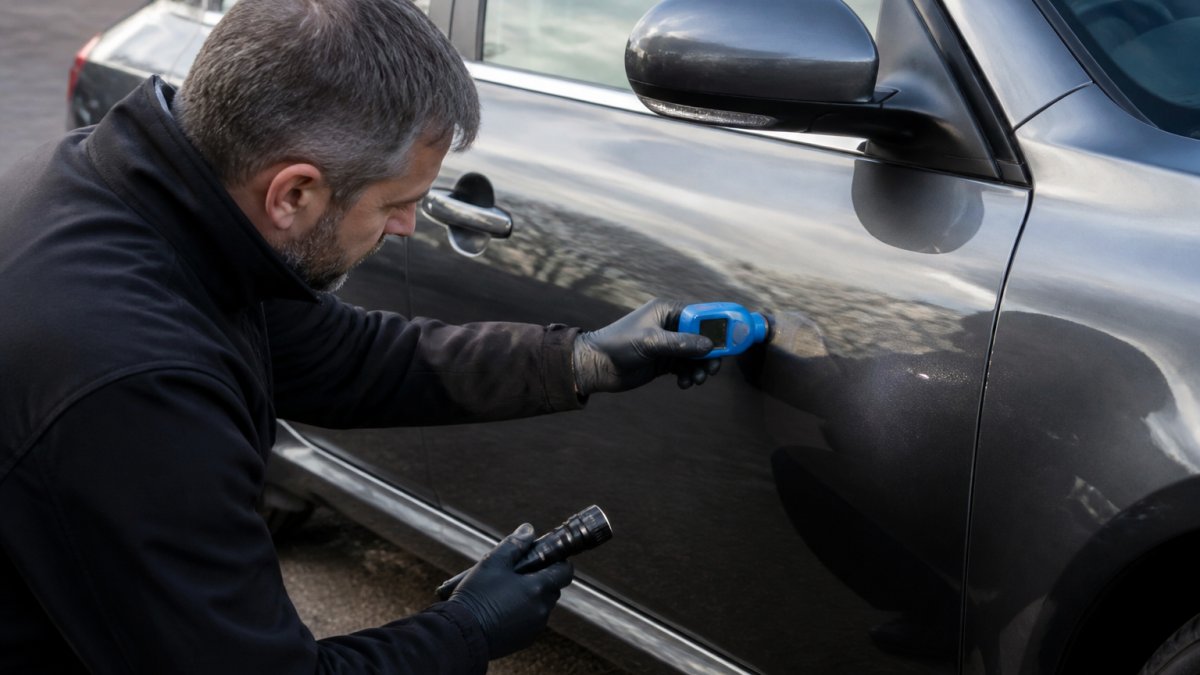
Start at the front and move methodically around the vehicle.
A paint depth gauge (under £50) tells you whether panels have been resprayed.
Look for rust in vulnerable areas: the underside of the doors, wheel arches, sills (the metal strips along the base of the doors), and around the windows.
Check the glass for cracks or chips; multiple cracks suggest repeated accidents or harsh conditions.
Panel gaps and alignment
Consistent panel gaps indicate the body was never severely damaged. Measure with a ruler or feeler gauge; a gap that widens or narrows along a panel suggests poor replacement or realignment. Check the boot lid and bonnet the same way, they should open and close smoothly without binding or rattling.
Signs of accident repair
Overspray, paint on rubber seals, trim, or glass, is a telltale sign of poor repair work. Inspect the edges of doors, windows, and trim with a torch. Mismatched paint colour between panels, even slight variations, suggests repainting; a phone photo in good light often shows the difference more clearly than the eye.
Check whether the car sits level. A car lower on one side may have suspension damage or a bent frame. The wheels should point straight ahead when the steering is centred.
Tyres, Brakes, and Suspension Checks
Tyres are consumables, but their condition reveals how the car has been driven and maintained.
Check the tyre date code, a four-digit number on the sidewall showing week and year of manufacture.
Examine the spare tyre too, a flat or damaged spare is useless and costs money to replace.
Press down on each corner and release.
Brake condition is critical for safety.
Engine Bay and Fluid Inspection
The engine bay tells you whether the car has been maintained or neglected.
Check fluid levels with the dipsticks. Engine oil should be amber or brown; black oil suggests infrequent changes.
Inspect the battery terminals for white, blue, or green crusty corrosion, clean terminals indicate regular maintenance.
Check belts and hoses for cracks, fraying, or splits, a failed serpentine or timing belt can cause significant engine damage.
Examine the engine block and cylinder head for cracks or white residue, which indicates coolant leakage.
Interior, Electrics, and Cold-Start Test
The interior reveals how the car has been used and cared for. Check seats, carpets, and trim for tears, stains, or odours.
Test all electrical equipment: windows, mirrors, locks, lights, and climate control. Windows that stick or move slowly indicate worn motors or track problems; broken seat adjusters are expensive to repair.
Turn the ignition to on without starting the engine; all dashboard lights should illuminate briefly, then extinguish. Lights that remain on indicate fault codes.
Perform a cold-start test by turning the key without warming the engine.
Downloadable Used Car Inspection Checklist PDF
A systematic approach to a used car inspection checklist ensures you don't miss critical issues. The checklist below covers the main areas:
Pre-Purchase Inspection Checklist
Paperwork & History
- Registration document matches VIN
- Service history complete and consistent
- MOT records for last three years reviewed
- No recurring advisories or failures
- Recalls checked and resolved
- Ownership history verified
Exterior
- Panel gaps consistent (3-4mm)
- Paint depth measured (100-150 microns standard)
- No rust on sills, arches, or underside
- Glass intact, no cracks
- Rubber seals undamaged
- Overspray checked for repair signs
- Colour match consistent across panels
- Vehicle sits level, wheels aligned
Tyres & Suspension
- Tread depth minimum 3mm (legal: 1.6mm)
- Tyre date code checked (replace if over 6 years)
- Tread wear even across all tyres
- Spare tyre serviceable
- Suspension compresses and returns smoothly
- No clunks or creaks when bounced
Brakes
- Brake pads at least 3mm thick
- Brake discs smooth, no scoring or warping
- Brake fluid level correct
- No brake fluid leaks
Engine Bay
- No oil, coolant, or transmission fluid leaks
- Engine oil colour amber or brown
- Coolant level at marked line
- Transmission fluid bright red
- Battery terminals clean
- Battery age within 5 years
- Belts and hoses intact, no cracks
- No engine block cracks or coolant staining
Electrics & Interior
- All windows, mirrors, locks operate smoothly
- Seats adjust through full range
- Air conditioning blows cold
- Heating works effectively
- All dashboard lights illuminate then extinguish
- Interior clean, no tears or stains
- No cigarette smoke or musty odours
- Seatbelts function correctly
Used Car Test Drive Checklist: What to Test on the Road
The test drive is where you confirm everything works together.
Test the brakes at various speeds.
Change gears through all ratios. Manuals should shift crisply without grinding or difficulty finding gears; automatics should shift smoothly without hesitation or harsh engagement.
Feel the suspension over bumps and potholes, it should absorb impacts without excessive bouncing or harshness in the cabin. Clunking or rattling over rough surfaces indicates worn components.
When to Get a Used Car Inspection by a Mechanic
A personal inspection is valuable, but a professional mechanic provides expert insight into mechanical condition and hidden problems. Consider hiring one if:
- You lack confidence in your own technical knowledge
- The car is older than 10 years or has high mileage (over 100,000 miles)
- You've identified potential issues during your own inspection
- The car is a specialist make (European brands, for example) requiring specific expertise
- You're purchasing from a private seller rather than a dealership
An independent mechanic typically charges £100-200 for a comprehensive pre-purchase inspection, using diagnostic equipment to identify fault codes, analysing fluids, and assessing structural integrity. Once you've had the inspection completed and are ready to move forward, you can apply for car finance to fund your purchase.
At TML Cars Limited, we pride ourselves on thorough vehicle preparation before sale. We can discuss our car standards and the warranty options available to give you confidence in your purchase.
A professional inspection provides an objective assessment and peace of mind, particularly valuable for a high-value vehicle or one with an unusual history. The cost is small compared to undiscovered mechanical problems.
A thorough used car inspection checklist protects you from costly mistakes and hidden problems.
Frequently Asked Questions
What should I check when inspecting a used car?
Start with paperwork: VIN, registration, service records, and accident history. Then inspect the exterior for rust, paint damage, and panel gaps. Check tyres for tread depth and date codes, examine fluid levels and condition in the engine bay, test all electrics and warning lights, and take a test drive to assess brakes, steering, and suspension. A cold-start test reveals engine condition. This used car inspection checklist covers the essentials to spot mechanical red flags before purchase.
How do I check a used car's history before buying?
Request the full service history and cross-reference it with the odometer reading. Check the V5C registration document to confirm the owner's details and whether the vehicle has been written off. Use the VIN to verify accident history through available records. Ask about any warranty work, recalls, or known issues with that model. Legitimate sellers provide transparent documentation. If records are incomplete or don't match the mileage, that's a red flag. A used car history check protects you from inheriting hidden damage or outstanding finance.
What should I look for on a used car test drive?
During your used car test drive checklist, assess how the car starts from cold, accelerates smoothly, and brakes evenly without pulling to one side. Listen for unusual noises from the engine, transmission, or suspension. Check that the steering feels responsive and centred. Test all warning lights, wipers, lights, and heating. Drive on different road surfaces to feel for vibrations or clunking. Verify that the clutch (if manual) engages smoothly. A good test drive reveals suspension wear, brake issues, and transmission problems that might not show in a static inspection.
How can I tell if a used car has been in an accident?
Look for paint overspray on rubber seals, misaligned panel gaps, and colour variation across panels. Check underneath for welding marks or fresh welds on the chassis. Inspect the bonnet, doors, and wings for dents or repairs. Request the accident history report using the VIN. Ask the seller directly about any damage and repairs. Professional repairs are less obvious than amateur ones, so a used car inspection by a mechanic can reveal hidden frame damage using specialist tools. Inconsistent service records or missing panels are warning signs.
Should I get a mechanic to inspect a used car before buying?
Yes, a professional used car inspection by a mechanic is worth the cost, especially for older or higher-mileage vehicles or specialist brands like Alfa Romeo, BMW, and Porsche. A mechanic uses diagnostic tools to check for fault codes, assess wear on critical components, and identify repairs you might face. They can estimate repair costs for any issues found. For premium vehicles, this inspection protects your investment and reveals problems a visual check alone would miss. Most specialists recommend a mechanic's inspection before committing to purchase.
What documents should I check when buying a used car?
Verify the V5C registration document matches the seller's name and address. Check the MOT history and service records for regular maintenance. Confirm the VIN on the chassis matches the paperwork. Look for evidence of major repairs or recalls. Request proof of ownership, finance settlement letters if applicable, and any warranty documentation. Missing paperwork is a red flag. TML Cars provides transparent service histories with every vehicle, giving you confidence in the car's maintenance background and condition.
What are the biggest red flags when buying a used car?
Avoid cars with incomplete service history, mismatched VINs, or evidence of poor repairs. Watch for rust on the chassis, significant tread wear on tyres, or leaks in the engine bay. Be suspicious of high mileage without maintenance records, warning lights that won't clear, or reluctance from the seller to provide documentation. Accident damage that's been poorly repaired, steering play, or brake issues during the test drive are serious concerns. If something feels wrong or the seller avoids questions, walk away. A trustworthy dealer like TML Cars welcomes thorough inspection and provides full transparency.
How long does a used car inspection take?
A thorough visual inspection typically takes 45 minutes to an hour. A professional mechanic's inspection, including diagnostic scanning and test drive, usually takes 1.5 to 2 hours. Paperwork and history verification add another 15-30 minutes. Don't rush the process; a careful inspection prevents costly mistakes. TML Cars ensures every vehicle is meticulously prepared before sale, and our team can guide you through the inspection process to answer questions and address concerns in detail.