 How-to
Avoiding Hidden Faults in Used Cars: A Buyer's Guide
Last Updated: November 14, 2026
Quick Summary
Avoid hidden faults in a used car by inspecting it thoroughly before buying, checking its service history, and taking a structured test drive. Look for uneven panel gaps, uneven tyre wear, dark or milky oil, lights that stay on, and damp or musty smells. Compare dashboard mileage with service records to spot inconsistencies.
- Look for uneven panel gaps, mismatched paint and bubbling under the lacquer.
- Uneven tyre wear suggests alignment or suspension trouble.
- Dark or milky oil can signal engine problems.
- Compare dashboard mileage with service records to spot anything that does not add up.
- Take a structured test drive on slow roads, fast roads and a hill.
Table of Contents
- Inspecting a Used Car Before You Buy
- Checking a Used Car's History and Test Drive
- Booking Your Viewing at TML Cars in Wincanton
- Frequently Asked Questions
Inspecting a Used Car Before You Buy
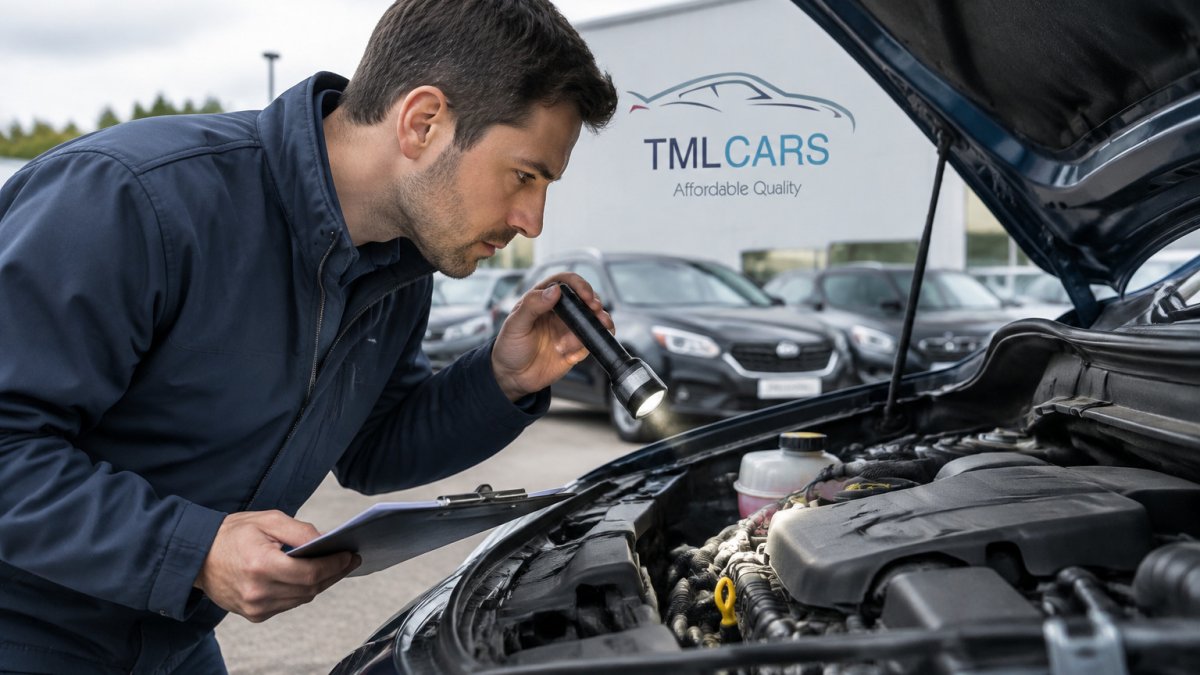
Hidden faults rarely announce themselves, so check everything before handing over any money. Even a careful inspection can miss hidden faults, so it pays to look closely for yourself before you buy.
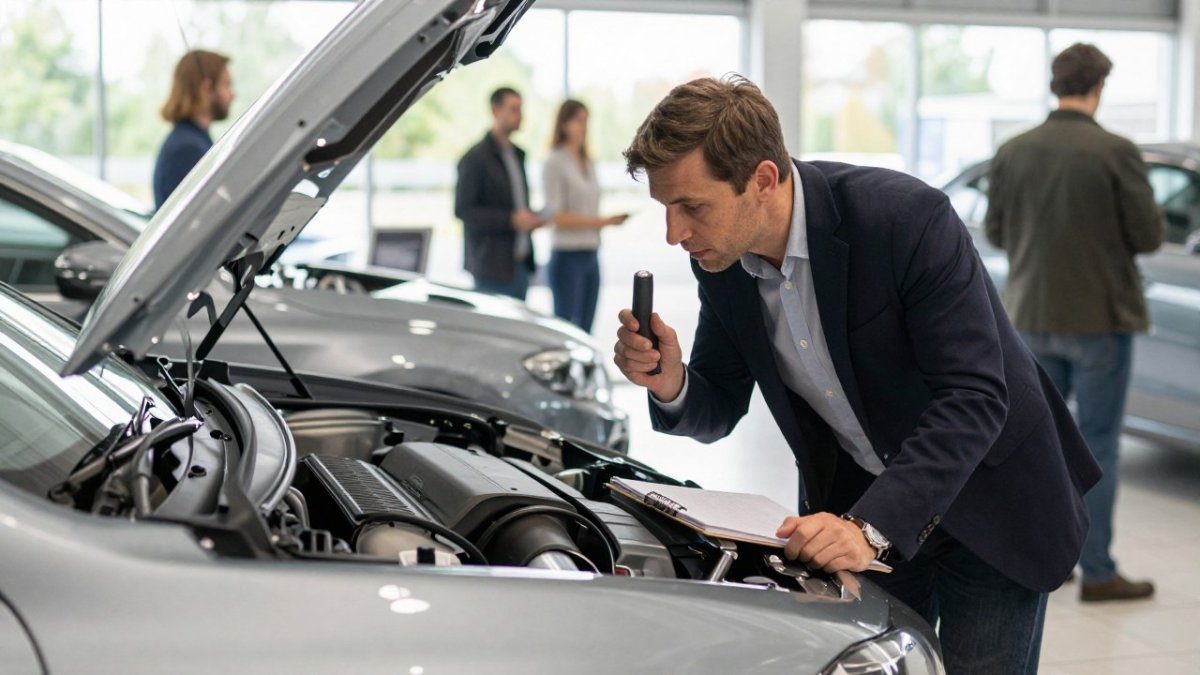
A buyer in a daylight showroom forecourt looks closely at the underside of a used car's bodywork with a torch, a notepad resting on the bonnet beside them. | section:Inspecting a Used Car Before You Buy
Start with a walk-around. Look for uneven panel gaps, mismatched paint and bubbling under the lacquer, signs of past repair work. You can also review our car standards to see what this dealer's cars are held to before you buy.
Check these basics next:
- Tyres: uneven wear suggests alignment or suspension trouble
- Fluids: dark or milky oil can signal engine problems
- Warning lights: a light that stays on after start-up needs answers
- Smell: damp or musty interiors may hint at water damage
Watch out: a car that starts cold without smoke, rattle or hesitation is worth noting, but it does not prove the engine is sound.
Before buying, work through these basic checks to spot signs of hidden faults.
| Check | What to look for | Warning sign |
|---|---|---|
| Panel gaps and paint | Uneven gaps, mismatched paint | Bubbling under the lacquer, past repair work |
| Tyres | Uneven wear | Suggests alignment or suspension trouble |
| Fluids | Oil condition | Dark or milky oil can signal engine problems |
| Warning lights | Lights after start-up | A light that stays on needs answers |
| Interior smell | Damp or musty odour | May hint at water damage |
Checking a Used Car's History and Test Drive
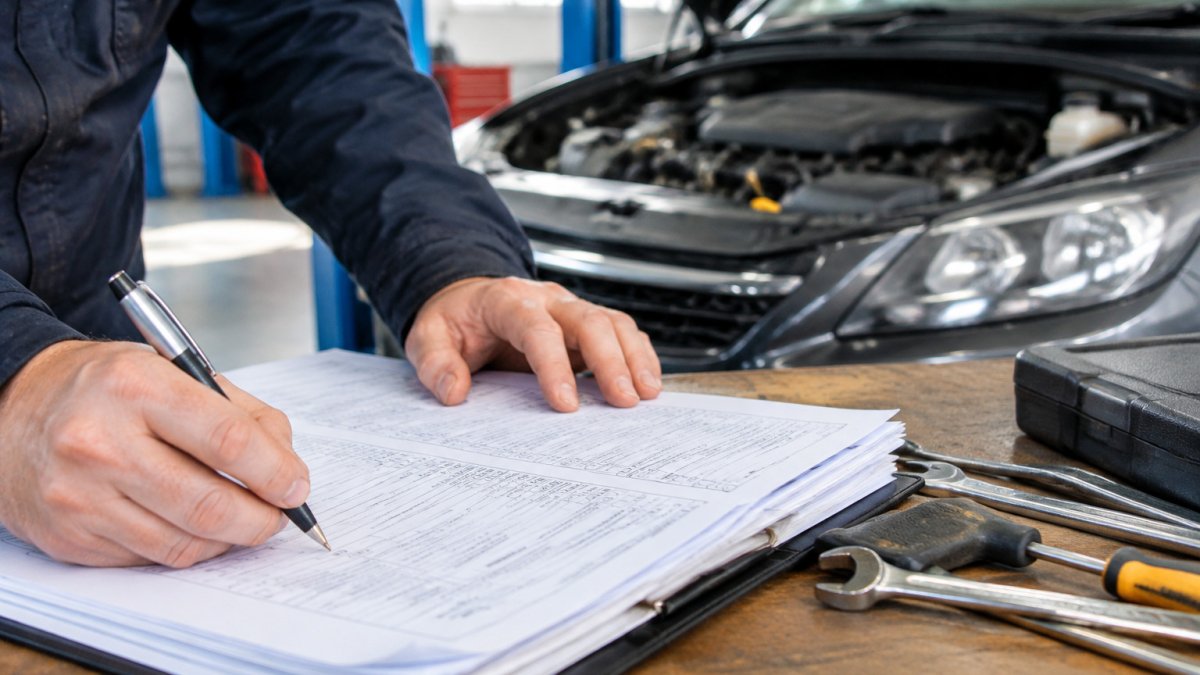
Ask for the full service history and repair paperwork (Consumer advice and protection). Compare dashboard mileage with service records to spot anything that does not add up, because hidden faults often show up as gaps in the paperwork.
Take a structured test drive on slow roads, fast roads and a hill. Listen for knocks, check the brakes in a straight line and note any pulling to one side.
Booking Your Viewing at TML Cars in Wincanton
Once you have a shortlist, arrange a viewing to run through these checks in person, looking for hidden faults that paperwork alone cannot reveal. Bring questions and allow time for a proper test drive.
Visit our website to browse our online showroom, which is open 24 hours a day.
Ready to view a car? Book your test drive with TML Cars Limited and see the difference careful preparation makes.
Frequently Asked Questions
How can I check a used car for hidden faults?
Start with a walk-around inspection in good daylight, checking panel gaps, paint thickness and signs of accident damage. Then look under the bonnet for leaks and check the tyres for uneven wear. Pair this with a documented service history and a structured test drive. Ask the seller for a written statement of known faults. If you are unsure, arrange an independent inspection before you commit to the purchase.
What questions should I ask when buying a used car?
Ask how many owners the car has had, whether it has a full service history and whether any work has been done recently. Check if the car has outstanding finance or has been recorded as a write-off. Request the MOT history, which is free to check online. Ask why the car is being sold and whether any faults are known. Get all answers in writing so you have a record if a problem appears later.
Do I need a test drive before buying a used car?
Yes. A test drive is one of the few ways to check how the car behaves under load. Drive on a mix of roads, including a stretch at motorway speed. Listen for knocking, whining or grinding, and check the gearbox shifts smoothly. Watch for warning lights and note any pulling to one side. Start the engine from cold if you can, since some faults only show when the engine is cold.