 Ultimate guide
How to Source Rare Car Models: A Buyer's Guide
Table of Contents
- Defining the Specification Before You Start Searching
- Where to Look: Specialist Dealers, Owners' Clubs and Online Marketplaces
- Salvage Yards, Auctions, Autojumbles and New Old Stock
- Choosing Between Doing It Yourself and a Bespoke Car Sourcing Service
- How to Verify Used Car History, Provenance and Authenticity
- Inspecting the Car: A Used Car Inspection Checklist
- Budgeting for Total Cost, Import Rules and Safe Transactions
- Your Next Step: Starting a Specification Brief for Your Search
- Frequently Asked Questions
Last Updated: November 12, 2026
Finding a rare car is rarely a matter of browsing a few listings. Low production numbers, discontinued trims and regional differences mean the vehicle you want may exist in only a handful of places across the country, if it exists at all. A search that looks simple on paper can quickly turn into months of phone calls, forum threads and unanswered enquiries. This guide explains how to source rare car models, from defining what you need to closing the purchase safely, because learning how to source rare car models well takes a clear plan.
Sourcing a rare car is different from buying a common one. A mainstream hatchback has thousands of identical examples for sale at any moment, so a buyer can compare freely. A discontinued sports variant might have only a few hundred units built, and many of those are already in private collections. The real work is locating the car, then confirming that its condition, history and specification match what you were promised.
Most people underestimate three things. First, rarity is often about trim and specification rather than the model name itself. Second, the best examples rarely appear on public marketplaces for long. Third, verification takes as much effort as the search. Expect to spend time on each stage rather than expecting a single listing to solve the problem.
Defining the Specification Before You Start Searching
Before contacting anyone, write down exactly what you want. Specify the make, model, year range, engine, gearbox, trim, colour preferences, mileage ceiling and any options that matter, such as original wheels or a particular interior. Vague requests like "an early example" generate vague offers and waste everyone's time.
Decide which features are essential and which are negotiable. A buyer who insists on one colour and a specific engine variant will have a much smaller pool than one willing to accept either. Note your maximum budget and whether it includes transport, paperwork and any restoration you may need to pay for.
A practical method is to create a one-page brief listing essentials, preferences and deal-breakers. Share this brief with specialists and sourcing services, because a clear specification lets them filter quickly and tell you honestly whether a match is realistic.
Where to Look: Specialist Dealers, Owners' Clubs and Online Marketplaces
Specialist dealers who focus on a particular marque often know the best examples in their network and can sometimes source a car directly from a private owner. Compare a used car dealer with a private seller in the UK to see which route gives you more protection. Ask them about their trusted contacts rather than relying only on their stock list.
Owners' clubs and enthusiast forums are among the most productive sources for rare models. Members tend to know which cars have been kept original, which have been modified and which owners are considering a sale before the car is advertised. Join the relevant club, introduce yourself and explain what you are looking for. Be patient, as recommendations build over time.
Online marketplaces and classified sites are useful for tracking listings over a period. Set up saved searches with alerts and check them regularly. Use the same specification brief to filter results so you are not tempted by near-misses. Treat every online listing as a starting point for verification rather than a guarantee of quality.
Salvage Yards, Auctions, Autojumbles and New Old Stock
Salvage yards and auto recyclers occasionally hold rare donor vehicles or parts that can be used to complete a restoration or identify a matching example. They are more valuable for parts than whole cars, so approach them with specific part numbers from your research.
Auctions can produce rare cars, but they require discipline. Inspect vehicles in person before bidding, factor in buyer's premiums and transport costs, and set a firm maximum. Auction catalogues often contain limited detail, so ask for documentation and photographs of the areas that matter most to the model.
Autojumbles are informal markets where owners sell spares, memorabilia and occasionally whole cars. They are good for meeting knowledgeable sellers face to face. New old stock (NOS) refers to genuine, unused parts that remain in original packaging. Finding NOS can make a restoration far more authentic, though it is often scarce and may be priced at a premium.
Choosing Between Doing It Yourself and a Bespoke Car Sourcing Service
Sourcing yourself gives you full control and avoids service fees. It suits buyers with time, local knowledge and the confidence to inspect cars and negotiate. The disadvantage is that searching across dealers, clubs, marketplaces and auctions is time-consuming, and it is easy to miss opportunities.
A bespoke car sourcing service takes on the search and filtering for you. See the benefits, costs and checks of personalised car sourcing before you decide. A good provider will work from your specification brief, use their network to locate candidates, arrange inspections and manage the early negotiation. This can shorten the timeline considerably, particularly for models that rarely appear for sale.
Compare the two honestly. If you have the time and the model is reasonably available, doing it yourself may be sufficient. If the car is extremely rare, you live far from the likely sellers, or you lack time to search properly, a sourcing service is often worth considering. Ask any provider how they charge, what they include and how they verify the cars they propose.
How to Verify Used Car History, Provenance and Authenticity
Verification is where rare-car purchases are won or lost. A common model can be replaced if it turns out to be wrong; a rare one often cannot, and the premium you pay is largely for identity, originality and documented history. Treat verification as a separate workstream that runs alongside the search, not a box you tick the day before collection.
Start with identity. The vehicle identification number (VIN) should appear in several places and agree across all of them: the registration document (V5C), the chassis plate, the stamped chassis itself and, where the model has one, the engine number. On older vehicles, check that the VIN plate has not been re-riveted and that the stamping looks factory rather than hand-stamped.
Use the DVLA's vehicle enquiry service to confirm tax and MOT status, and the MOT history service to review recorded mileage and advisories over time (Check the MOT status of a vehicle). Look for mileage that moves backwards, long gaps in testing, or advisories that reappear unresolved. These are patterns, not proof, but they tell you what to ask about.
Provenance is the documented chain of ownership and origin. For rare models, the strongest evidence usually comes from the marque itself or its recognised club: a build sheet or factory record confirming the original specification, a heritage certificate, or a dating letter.
Originality is a separate question from identity. A matching-numbers car retains its original engine, gearbox and (where recorded) axle, and that is worth confirming against factory records rather than the seller's word. Check paint code, trim code and option codes against the build record, and look for evidence of re-trimming, panel replacement or colour change.
Documentation should be consistent across sources. Service books, invoices, MOT certificates, import paperwork and previous V5C copies should tell the same story about dates, mileages and keepers. Gaps are not always a warning sign, many older cars simply lost their paperwork, but they should be explained rather than glossed over. Ask for the full file, not a curated selection, and read it before you travel to view.
Where authenticity materially affects the price, commission an independent inspection from a specialist who knows the model, not a general mechanic. A marque specialist will know the correct casting numbers, panel gaps, trim materials and date codes, and can spot a re-shelled or cloned car that a generic check would miss.
Watch out: a cloned identity is the most expensive mistake in this market, a stolen or written-off car given the identity of a genuine rare example, so never accept a VIN match on the V5C alone without checking the physical stampings and the register.
Warranty cover affects your protection after purchase, so ask any dealer what warranty they provide and what it excludes. Review the warranty options from TML Cars to see what cover is available. TML Cars Limited includes a standard 1-month warranty on qualifying used vehicles.
Inspecting the Car: A Used Car Inspection Checklist
Arrange an inspection before paying any deposit. Bring a torch, a magnet for checking body filler, a notebook and ideally a knowledgeable friend or specialist who knows the model's common weak points.
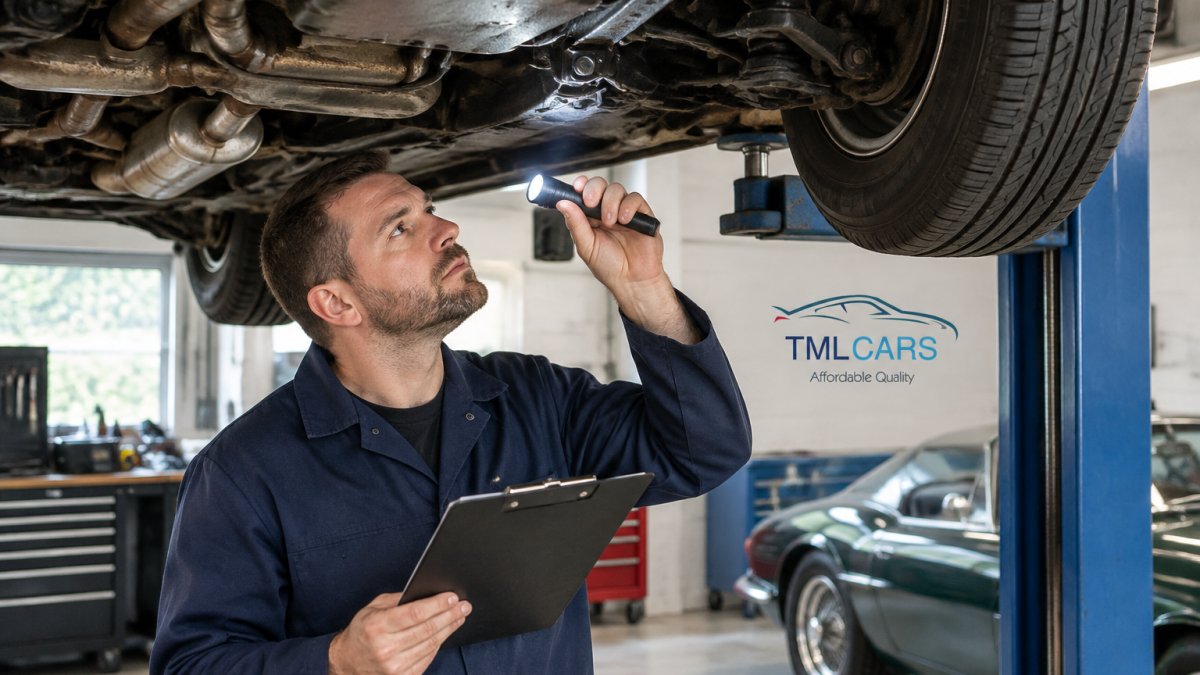
Use this checklist as a baseline:
- Body and panels: check for uneven gaps, paint thickness variations and rust in sills, wheel arches and floor pans.
- Chassis and underside: look for corrosion, previous accident repairs and damaged or replaced subframes.
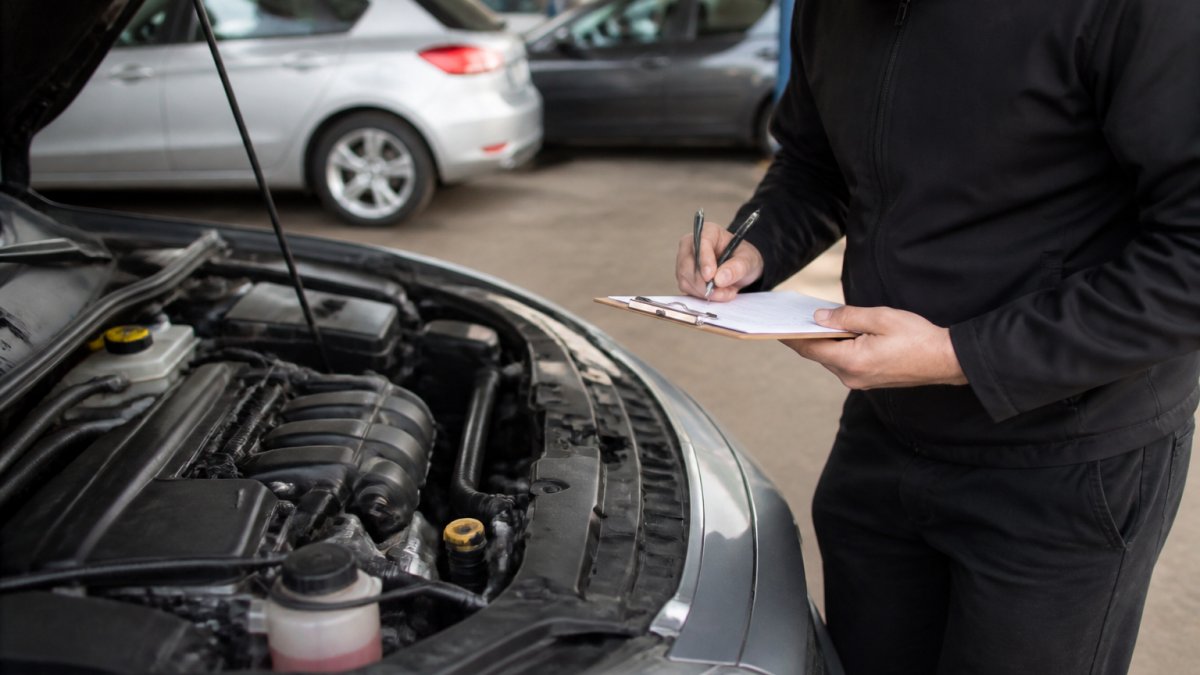
- Engine bay: check for leaks, unusual wear, mismatched numbers and the condition of belts and hoses.
- Interior: confirm the condition of trim, dash, seats and electrics against the claimed specification.
- Mechanical: arrange a test drive and, where possible, a compression or diagnostic check.
- Paperwork: match the VIN, registration and service records to the physical car.
Note anything that does not match the seller's description. Small issues can be negotiated, but undisclosed major faults are a reason to walk away.
Budgeting for Total Cost, Import Rules and Safe Transactions
The advertised price is the starting point, not the cost. Rare cars carry a longer tail of expenses than mainstream ones because parts are scarce, specialists are fewer and transport is more delicate. Build a total-cost model before you commit, and add a contingency of roughly 10-15% of the purchase price for the unexpected, most practitioners find that rare-car purchases rarely come in under budget.
Work through the cost lines in order. Purchase price is the headline. Add inspection fees (these depend on the model and the specialist), transport (a covered transporter for a non-running or high-value car costs more than a driven delivery), and storage if you cannot collect immediately. Then add initial servicing and consumables, fluids, belts, tyres, battery, because a car that has been standing will need them regardless of condition.
Ongoing costs deserve equal weight. Insurance for a rare or classic model is often agreed-value rather than market-value, so ask for that explicitly and expect the premium to reflect the agreed figure. Road tax depends on the vehicle's registration date and CO2 banding; many older cars fall into historic vehicle classes, but confirm the specific car's status rather than assuming. Parts availability affects both maintenance cost and downtime, so ask the marque specialist what commonly fails and what it costs to put right.
If you are importing, the process has several distinct stages and each has a cost. Confirm the vehicle's customs status and duty rate before agreeing a price, because the rate depends on the vehicle's origin and type. VAT is normally due on import at the standard rate, and the customs value used to calculate it includes the vehicle price plus international shipping and insurance.
Pricing for rare cars varies widely with condition, documentation and demand, so qualified guidance is more reliable than a single figure. You can see previously sold used cars from TML Cars to get a sense of the market. Check recent comparable sales, speak to specialists and ask for valuations from people who know the model. Pricing for TML Cars Limited's services depends on the vehicle and your requirements, so please visit the TML Cars Limited website or contact us for a current quote.
Protect yourself in every transaction. Never pay a deposit to someone you have not verified, and avoid bank transfers to unfamiliar accounts. Be alert to scams, including sellers who refuse to show the car, pressure you to pay quickly, or ask for payment through unusual channels. Use secure payment methods, get a written agreement and confirm ownership details before the balance is paid.
Watch out: a deposit paid by bank transfer to a private seller is effectively unrecoverable if the car turns out not to exist, so keep the deposit small, conditional and documented until identity and ownership are confirmed.
The advertised price is only the starting point, so the table below lists the main cost lines to budget for before committing.
| Cost line | Typical value | Note |
|---|---|---|
| Contingency | 10-15% of price | Rare-car purchases rarely come in under budget |
| Insurance | Agreed value | Ask for agreed-value cover explicitly |
| Transport | Covered transporter | Costs more for non-running or high-value cars |
| Import VAT | Standard rate | Based on price plus shipping and insurance |
| Deposit | Keep small | Make it conditional on inspection and verified ownership |
Your Next Step: Starting a Specification Brief for Your Search
Begin by writing your specification brief today. List the make, model, years, trim, mileage limit, budget and essential features, then add the deal-breakers you will not compromise on. This single document will make every conversation with dealers, clubs and sourcing providers more productive.
Once your brief is ready, request a car from TML Cars Limited and we will try to source it for you. Share the specification, your timeline and any flexibility you have, and we will explain honestly what is realistic. Taking this step turns an open-ended search into a focused process, and that is what finds rare cars.
Frequently Asked Questions
How do I find a specific rare car model for sale?
Start by writing a specification that names the exact model, trim, engine, colour options and production years you will accept. Then search specialist dealers, marque-specific owners' clubs and enthusiast forums, where cars are often offered privately before they reach general marketplaces. Set alerts on online marketplaces using the model name and common misspellings, and contact specialists directly with your brief. Rare cars rarely appear in one place, so repeating the search across several channels each week improves your chances considerably.
What are the benefits of using a bespoke car sourcing service?
A sourcing service searches dealer networks, trade contacts and private sellers on your behalf, which saves the time of contacting dozens of sellers yourself. Good services also check the vehicle's history and condition before you view it, and they filter out cars that do not match your specification. Fees and timescales vary by provider and by how hard the model is to find, so ask TML Cars for a current quote before committing to a search.
How can I verify the history and condition of a rare vehicle?
Request the V5C registration document and check that the chassis and engine numbers match the car. Obtain a full-service history with receipts, and run a vehicle history check to identify outstanding finance, write-off or theft markers. For rare models, ask for evidence of originality, such as matching numbers and documented restorations, and commission an independent inspection by a marque specialist before paying a deposit.
Are there specialist dealers for hard-to-find car models?
Yes. Many marques have specialist dealers and restorers who hold stock or know where cars are offered, and marque-specific owners' clubs often maintain registers of cars for sale. Ask specialists whether they can source a particular model, and check that they are members of recognised trade bodies or have verifiable trading histories. Other providers vary in their stock and expertise, so compare what each one can actually evidence about the cars it offers.
What should I look for when buying a rare or specialist car?
Prioritise originality and documentation over cosmetic condition, because a well-documented original car holds its value better than a heavily modified one. Check parts availability for the model, since some trim pieces, trim or electrical components may be difficult or expensive to replace. Confirm that the seller can explain the car's history and that the paperwork matches the vehicle in front of you.
How does a vehicle sourcing service work for private buyers?
You provide a detailed specification and a budget, and the service searches its network of dealers, traders and private sellers for matching vehicles. Shortlisted cars can then be discussed with you, and viewings or independent inspections can be arranged where available. Costs and timescales depend on the model, the specification and the condition you require, so request a written quote setting out what is included before you agree to a search.
How do I verify used car history before buying?
Check the V5C against the seller's details and the car's identifiers, then run a vehicle history check to look for outstanding finance, write-off category or theft records. Ask for the service book and receipts, and compare the mileage across records to spot inconsistencies. Verifying these documents before you travel to view the car saves time and reduces the risk of hidden problems.