 Ultimate guide
What Is Included in Used Car Preparation: A Buyer's Guide
Quick Summary
Used car preparation is the work a dealer does to make a vehicle ready for sale. It covers a structured inspection of mechanical, safety and cosmetic condition, followed by the repairs and cleaning needed to bring the car up to a consistent standard. Preparation is about condition and disclosure, not a guarantee against future faults.
- Preparation covers mechanical and safety checks, fluids and consumables, bodywork and glass, and interior and paperwork.
- A clean car is not the same as a prepared car, so ask what was checked and fixed.
- Preparation, servicing and an MOT are three different things and should not be confused.
- Ask for an inspection sheet with measured values, not just ticks, as evidence of preparation.
- Ask whether a diagnostic scan was run and whether any fault codes were cleared rather than repaired.
Table of Contents
- What Used Car Preparation Actually Covers
- Preparation, Servicing and an MOT: Three Different Things
- Mechanical, Fluid and Safety Checks Explained
- Bodywork, Paintwork, Glass and Interior Condition
- Used Car Preparation Checklist for Buyers
- The Used Car Reconditioning Process Step by Step
- How Preparation Varies by Age, Mileage and Price
- Electric and Hybrid Vehicle Preparation
- How Long Does It Take to Prepare a Used Car for Sale?
- Questions to Ask Before You Book Your Next Car
- Frequently Asked Questions
What Used Car Preparation Actually Covers
Used car preparation is the work a dealer does to make a vehicle ready for sale, and it covers far more than a wash and a tyre shine.
Preparation is about condition and disclosure, not a guarantee that a car will never develop a fault. That distinction matters, and we come back to it throughout this guide.
Watch out: a clean car and a prepared car are not the same thing. A car can look immaculate and still have worn brake pads, a tired battery or an overdue service.
In practice, preparation tends to cover four areas:
- Mechanical and safety checks on the engine, transmission, brakes, steering, suspension and exhaust
- Fluids and consumables, including oil, filters and coolant levels
- Bodywork, paintwork, glass and lights, with any damage noted or repaired
- Interior, electrics and paperwork, including the controls, spare keys and service records
Preparation standards differ between dealers, so the right question is not whether a car was "prepared" but what was checked, what was fixed and what was recorded. Our step-by-step guide to preparing a used car for sale walks through each stage of the process.
Preparation, Servicing and an MOT: Three Different Things
These three terms are often used interchangeably, and they are not the same. Confusing them is one of the most common reasons buyers feel misled after a purchase.
Preparation is the dealer's process of getting a used car ready for sale. It includes inspection, minor repairs, cleaning and cosmetic work.
Servicing is routine maintenance, usually against the manufacturer's schedule. It replaces oil and filters, checks key components and records the work in the service book.
An MOT is a legal test of roadworthiness carried out at an approved MOT testing station under the rules set by the Driver and Vehicle Standards Agency (DVSA). You can find the current test requirements on GOV.UK MOT test guidance.
A car can pass an MOT and still need a major repair soon after. It can also be well prepared and still have an MOT due the following week.
Mechanical, Fluid and Safety Checks Explained
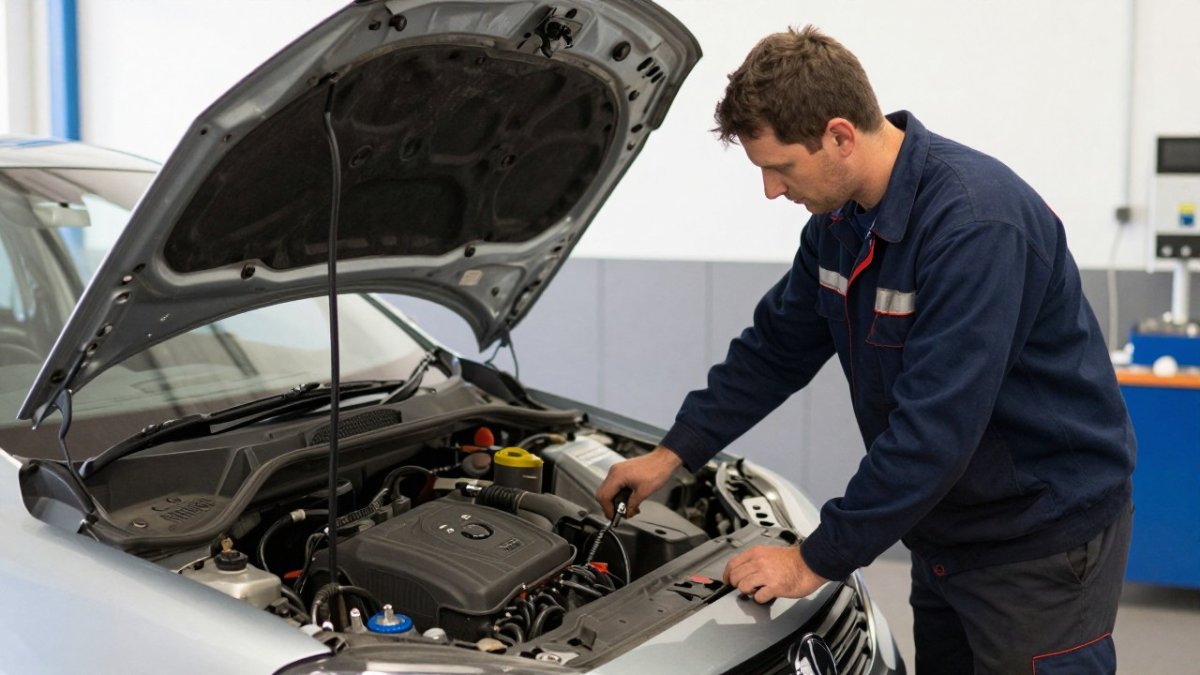
This is the part of preparation that matters most to a buyer's wallet, because it is where expensive faults hide. A thorough mechanical check is not a single inspection but a sequence of component-level checks, each with its own pass/fail judgement. The sections below set out what a competent preparation should cover, what the inspector is actually looking for, and what evidence you can ask to see.
Engine and underbonnet checks
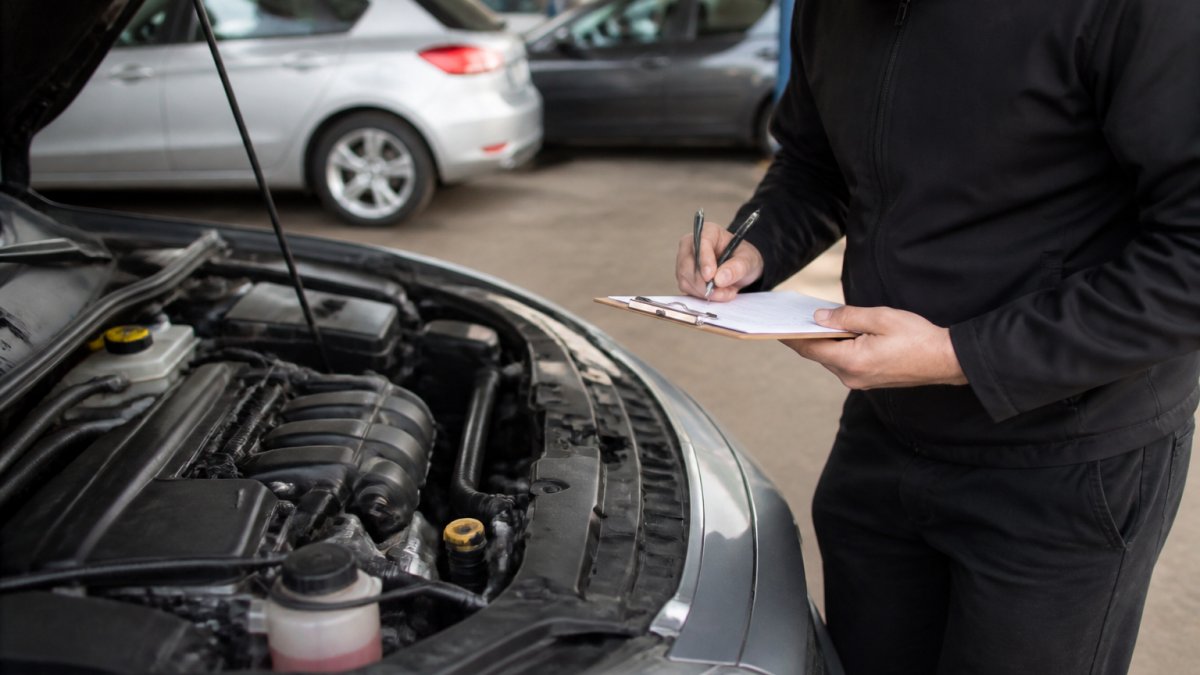
A mechanical check starts with the engine from cold, because some faults only show when the oil is thick and the components are at rest. The inspector should check oil level and condition on the dipstick, looking for a milky emulsion that suggests coolant mixing with oil, or a gritty feel that suggests neglected changes.
A common pattern is for preparation to include an oil and filter change even when the service schedule does not strictly require it, because fresh oil is cheap insurance and gives the buyer a clear starting point.
Transmission, steering, suspension and exhaust
Transmission checks depend on the type. On a manual, the inspector should check clutch bite point and any judder, and listen for whine or crunch on a test drive. On an automatic, the check should include fluid level and colour where a dipstick or inspection plug exists, and a road test through all gears including kickdown.
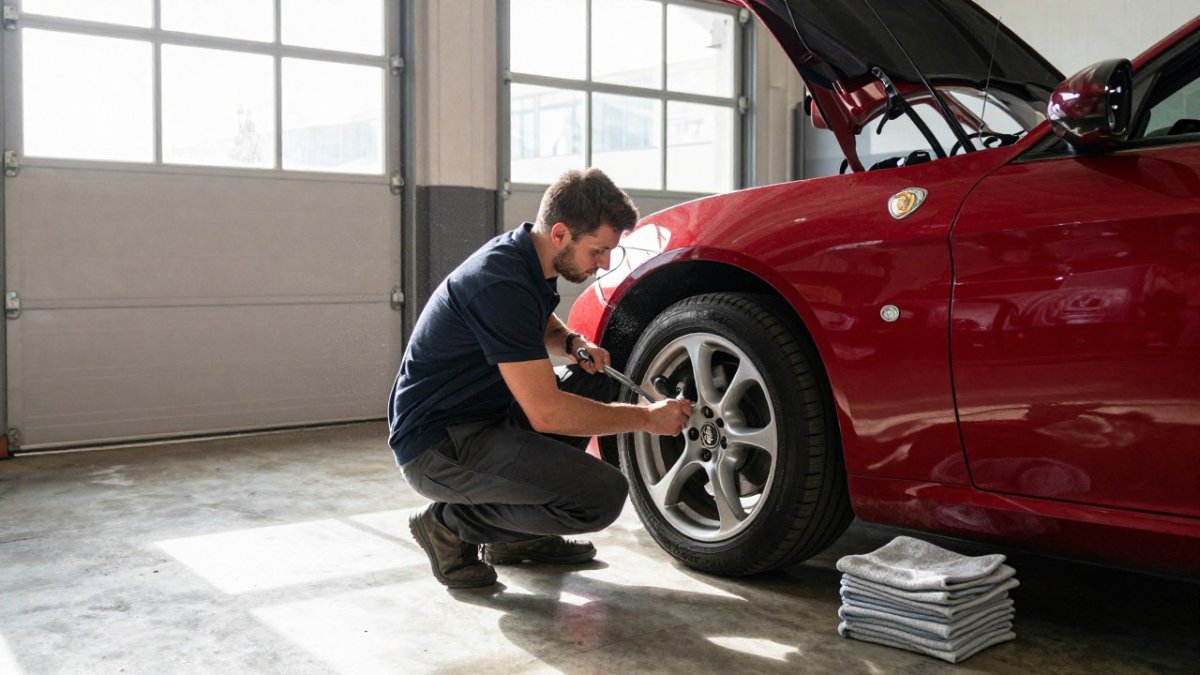
Steering and suspension checks look for play in track rod ends, ball joints and top mounts, and for shock absorbers that are leaking or bouncy. The inspector should check tyre wear patterns, because uneven wear points to alignment or suspension problems that a simple tread check will miss.
Brakes and safety systems
Brake checks are where preparation standards vary most. A thorough check measures pad thickness and disc thickness against the manufacturer's minimum, inspects pipes and hoses for corrosion and cracking, and checks the handbrake or electronic parking brake operation.
Safety systems extend beyond the brakes. The inspector should check seat belts for fraying and correct retraction, airbag warning lights through a diagnostic scan, and the operation of the horn, wipers and washers. Tyres should be checked for tread depth, and for age cracking and uneven wear (Maintaining your vehicle). Ask what the tread depths were at inspection.
Diagnostic scans and warning lights
A diagnostic scan is worth requesting for any car with warning lights on the dashboard, and for any car where the lights are suspiciously all off. A warning light can be cleared without fixing the underlying fault, which is why the scan should be read, not just reset.
Watch out: a car with no warning lights can still have stored fault codes, and a recently cleared code can take several drive cycles to return. Ask whether a diagnostic scan was run, whether any codes were cleared, and whether the car has been driven since.
Fluids, filters and consumables
Fluids and filters are checked and topped up or replaced as needed. That usually means engine oil, oil filter, air filter and fuel filter where the service schedule calls for it, along with brake fluid, power steering fluid, coolant and washer fluid. Fresh fluids alone do not prove a car is sound, but a recent oil change is a good sign that routine maintenance was kept up. Ask for the invoice or the service record entry, because a verbal assurance is not evidence.
What evidence to request
The evidence worth asking for is an inspection sheet with the measured values recorded, not just ticks. Pad and disc thickness, tyre tread depths, brake fluid moisture reading and any diagnostic fault codes should all be written down. If a dealer cannot produce that record, the preparation claim is unverified. A recorded check makes it easier to distinguish documented work from a general assurance, and Vehicleinspectionservices can help clarify what a courtesy vehicle check covers.
Bodywork, Paintwork, Glass and Interior Condition
Cosmetic condition is what you judge first, and it is also where preparation is most visible. Good preparation should address dents, scratches and paint defects that affect the car's appearance, and it should record any accident damage that cannot be fully repaired.
Check the following areas when you view a car:
- Paintwork: colour match between panels, overspray, and signs of respraying
- Glass: chips and cracks in the windscreen and side windows
- Lamp lenses: clouding, cracks and water inside the housing
- Wheels and tyres: kerbing damage and matching tyres
- Interior: seat wear, carpet condition, dashboard cracks and working controls, including the windows, mirrors, air conditioning and infotainment system
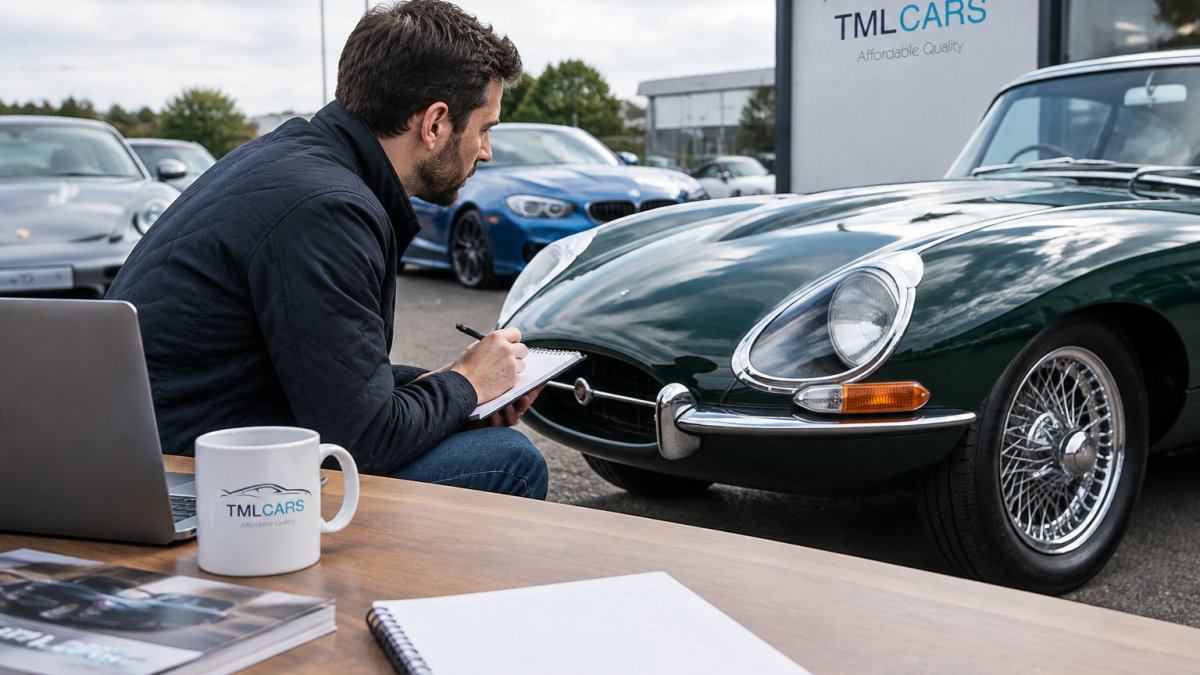
Accident damage is the area where a buyer most needs honesty. Ask whether the car has been in any accident, whether the damage was repaired professionally, and whether the repair is recorded in the vehicle history. Vehicle history checks can reveal outstanding finance, write-offs and mileage discrepancies, so they are worth doing independently.
Used Car Preparation Checklist for Buyers
Use this checklist when viewing any used car, whether or not the dealer has prepared it. It works as a conversation guide as much as a physical check.
- Ask for the V5C registration document and check the registered keeper count
- Ask for the full service history and check the service book stamps against the dates
- Check the current MOT certificate and its expiry date
- Ask for the diagnostic scan report and any fault codes that were cleared
- Check tyre tread depth and look for uneven wear
- Check fluid levels, including oil colour and any leaks underneath
- Inspect the brakes, steering and suspension on a test drive
- Check paintwork, glass and lamp lenses for damage or repairs
- Confirm you have both sets of keys and the locking wheel nut key
- Ask for a written record of what was repaired, replaced or left as it is
Keep the checklist, the report and any receipts together. They are your evidence if a fault appears later.
The article sets out the key checks a buyer should look for, whether or not a dealer has prepared the car.
| Area | What to check | Evidence to ask for |
|---|---|---|
| V5C document | Registered keeper count | The V5C registration document |
| Service history | Service book stamps against dates | Full service history |
| MOT | Current certificate and expiry date | Current MOT certificate |
| Diagnostics | Fault codes and any cleared codes | Diagnostic scan report |
| Tyres | Tread depth and uneven wear | Tread depths recorded at inspection |
| Fluids | Oil colour and leaks underneath | Service record or invoice |
| Brakes and suspension | Behaviour on a test drive | Inspection sheet with measured values |
| Bodywork | Paint, glass and lamp lens damage or repairs | Written record of repairs |
The Used Car Reconditioning Process Step by Step
Reconditioning is the sequence a dealer follows to take a car from trade-in or purchase to ready for sale. The steps below are typical, although each dealer's process will differ.
- Intake and history check. The car is logged, its V5C and history are reviewed, and outstanding finance or write-off markers are checked.
- Mechanical inspection. The engine, transmission, brakes, steering and suspension are tested, and a diagnostic scan is run.
- Repairs and servicing. Faults found in step two are repaired, and a service is carried out if the history is incomplete or overdue.
- Safety and MOT readiness. Lights, wipers, horn, brakes and tyres are checked against roadworthiness standards.
- Cosmetic repair. Dents, scratches, glass chips and interior wear are addressed where it is economical to do so.
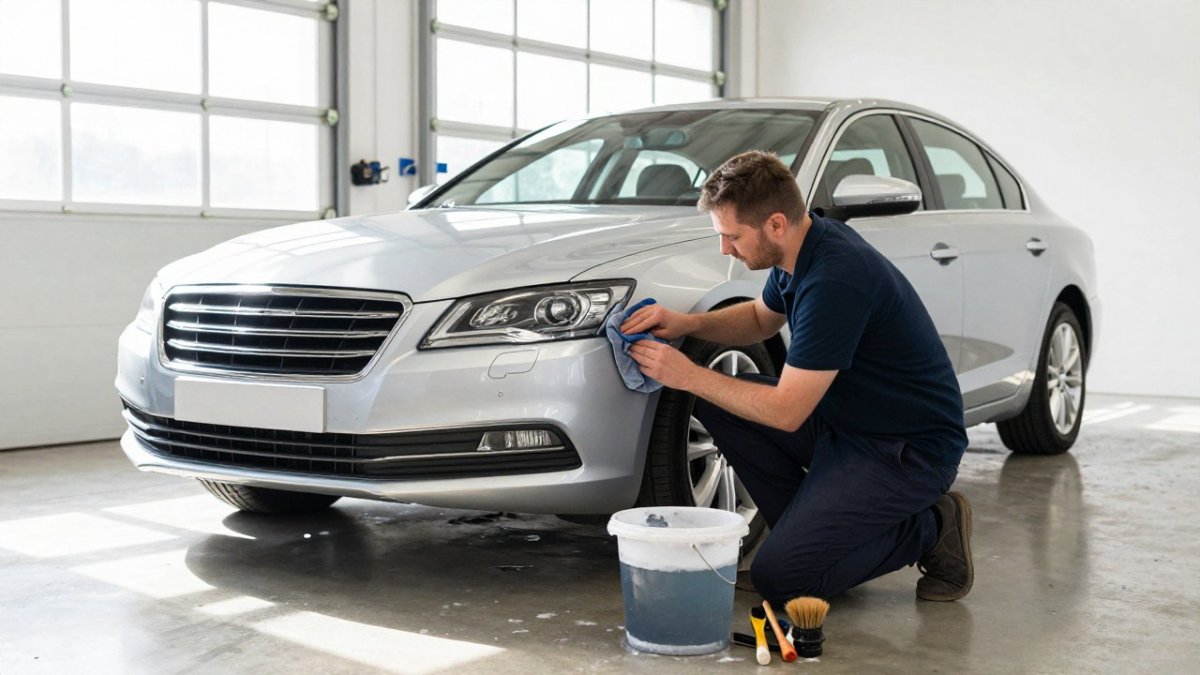
- Cleaning and valeting. The exterior is washed and polished, and the interior is cleaned, vacuumed and sanitised.
- Photography and listing. The car is photographed and its condition, history and any known defects are recorded.
- Final check. A second person checks the car against the preparation standard before it goes on sale.
A final check is worth asking about, as it is sometimes skipped by lower-cost operations.
How Preparation Varies by Age, Mileage and Price
Preparation depth should reflect the car's age, mileage and price. A three-year-old car with 20,000 miles and a full service history will need less work than a fifteen-year-old car with unknown history. Expecting the same level of preparation across all price points is unrealistic.
Lower-priced cars often need more mechanical attention and cosmetic repair, and they carry a higher risk of hidden faults. Older cars are more likely to need new brake components, suspension parts or exhaust work.
As a buyer, ask how the level of preparation relates to the age and price of the car you are considering. A transparent dealer will explain what was done and what was not, and why.
Electric and Hybrid Vehicle Preparation
Electric and hybrid cars need a different preparation process in several areas.
For battery electric vehicles, preparation should include a check of the battery's state of health where the manufacturer's diagnostic tools allow it.
Hybrid vehicles add a petrol engine, an electric motor and a traction battery to the checklist. The hybrid battery's condition, the inverter and the cooling system are all relevant.
Some dealers are less familiar with electric and hybrid preparation than with conventional cars. Ask whether the technicians have specific training for high-voltage systems, and whether battery health was checked.
How Long Does It Take to Prepare a Used Car for Sale?
Preparation time depends on the car's condition and the work required. A well-maintained, low-mileage car with a full history may take a day or two for inspection, cleaning and photography.
Time is also affected by the dealer's workload and the availability of specialist work such as paint repairs or electrical diagnostics. Quick preparation is not inherently a problem, but a very short turnaround for a car with known faults is a reason to ask more questions.
If you are buying, ask how long the car has been in preparation and what work was carried out during that time. The answer tells you how thorough the process was.
Questions to Ask Before You Book Your Next Car
Whether you are buying from us or another provider, these questions will show you how thorough the preparation really is:
- What specifically was inspected, and can I see the inspection report?
- Was a diagnostic scan run, and were any fault codes cleared rather than repaired?
- What was repaired, replaced or serviced, and do you have receipts or invoices?
- Is there a full service history, and does it match the mileage?
- What does the warranty cover, and for how long? You can review the warranty options available from TML Cars before you decide.
- Can I book a test drive and have the car inspected independently before I commit?
At TML Cars Limited, we are happy to answer these questions for any car we sell. You can check our car standards to see how we approach preparation, and our 1-month warranty cover is explained in full on our website. If you want to see a car in person before you decide, you can book a test drive directly.
Last Updated: November 10, 2026
Frequently Asked Questions
What does used car preparation include?
Used car preparation usually covers mechanical checks, fluid levels and top-ups, brake and tyre inspection, a diagnostic scan for warning lights, safety checks, cleaning and valeting, and cosmetic repairs to bodywork and interior. It is not the same as a formal MOT test, which is carried out by an authorised MOT testing station. Ask the dealer for a written list of the checks completed and any work carried out, so you can see exactly what your car has received before purchase.
Are repairs included in used car preparation?
Repairs are often included where a fault is found during the used car preparation checklist, but the scope depends on the dealer and the car's condition. Larger faults, such as an engine or gearbox issue, may be disclosed rather than repaired, with the price reflecting the work needed. Ask for any defects to be listed in writing before you agree a price.
What is the difference between a used car service and preparation?
A service is a scheduled maintenance visit that replaces oil, oil and air filters, and checks components against the manufacturer's schedule, usually recorded in the service book. Preparation is a pre-sale inspection and reconditioning process that checks the whole vehicle for roadworthiness, condition and presentation. A car can be prepared without a full service, and a service may not cover the cosmetic and safety checks that preparation includes. Request both the service history and the preparation record.
Does used car preparation include an MOT?
No. An MOT is a legal test carried out at an authorised testing station under the Ministry of Transport rules applied by the DVSA, and it has its own pass criteria. A preparation check does not replace the test. If a car's MOT has expired or is close to expiry, ask the dealer whether one is included and check the certificate yourself.
How long does it take to prepare a used car for sale?
The time depends on the car's age, mileage, condition and the amount of work needed. A low-mileage car in good condition may need only a few days for cleaning, checks and paperwork, while a car needing bodywork, parts or diagnostic work can take a week or more. Timescales also depend on parts availability and the dealer's workload. The current timescale for a specific vehicle can be confirmed by contacting TML Cars Limited directly.
What should I ask a dealer about a car's preparation?
Ask which checks were completed and by whom, whether a diagnostic scan was run, and whether any faults or repairs were recorded. Request the service history, the V5C registration document, and a list of any replacement parts fitted. Ask whether the car has a warranty, what it covers and for how long, and what your rights are if a fault appears after purchase. Written answers give you a record to refer back to.